Price: [price_with_discount]

[ad_1]
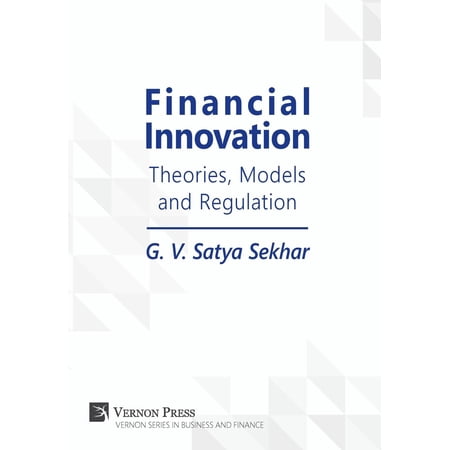
Financial innovation is the main feature of the global financial system. With the passage of time, financial innovation brings higher economic benefits. In addition to the basic theory of financial management, financial engineers need to master the knowledge of optimization and financial modeling techniques in the process of creating new financial products. Levich (1985), Smith, Smithson and Wilford (1990), Verghese (1990), Merton (1992), Levine (1997), John D Finnerty (2002) and other groundbreaking research literature support modern financial innovation. , Tufano (2003) and Draghi (2008) and so on. This book corresponds to the need to provide comprehensive research on financial innovation and economic management mechanisms. The key part of the financial innovation covered in this book is the process of creating innovative financial securities and derivatives pricing, which will bring new returns to investors. The book also covers a series of empirical studies that confirm the theory of financial innovation. This also exposes myths surrounding the performance evaluation model.
This book is divided into six chapters. The first chapter summarizes the important considerations of the application of financial innovation theory. The second chapter introduces the theory of supporting financial innovation practice. The third chapter focuses on the application of technology in financial modeling. Chapter IV identifies the relationship between financial innovation and the wider economy. Chapter 5 discusses the status of financial innovation in the global financial system. The sixth and final chapter is a comparative analysis of India and the United States.
[ad_2]
Orignal From: Financial Innovation: Theory, Model and Regulation

No comments:
Post a Comment